Dental implants are a long-lasting solution for missing teeth, but in some cases, they can develop complications. We specialize in saving failing dental implants to restore their function, prevent further damage, and protect your investment in your smile.
How We Regenerate Lost Bone
Bone Grafting
Bone grafting restores lost bone by using natural or synthetic materials to rebuild the jaw structure.
Guided Bone Regeneration
A specialized technique using membranes and grafting materials to stimulate new bone growth.
Platelet-Rich Plasma (PRP) Therapy
Harnessing the body’s natural healing properties, PRP accelerates bone regeneration.
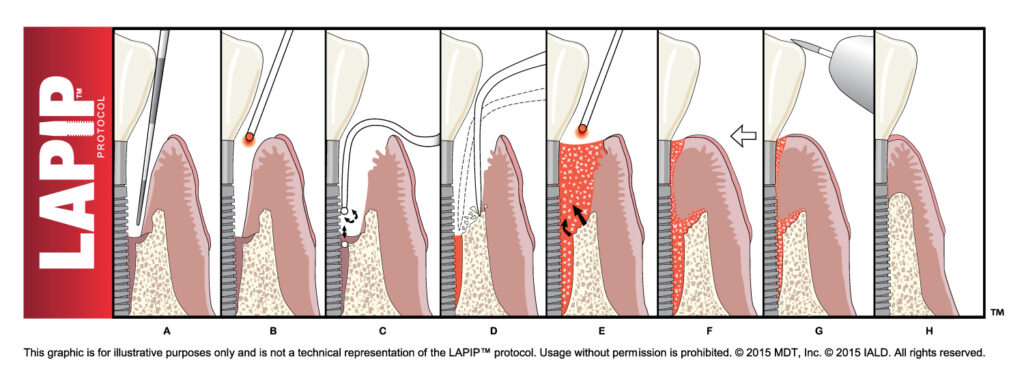
LAPIP STEPS:
1. Initial Assessment: A periodontal probe measures pocket depths around the implant to determine the full extent of bone loss.
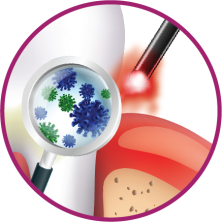
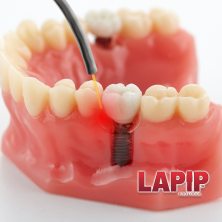
2. Laser Disinfection (Pass 1): The PerioLase® MVP-7™ laser is used to target and eliminate bacteria, diseased tissue, and pathologic proteins, while removing titanium corrosion contaminants inside the soft tissue.
3. Mechanical Cleaning: Ultrasonic scalers and specialized tips get rid of calculus and cement from the implant’s surface.
4. Bone Modification: The alveolar bone is modified to remove diseased bone, stimulate bleeding, and release stem cells and growth factors to speed up bone regeneration.
5. Clot Formation (Pass 2): The laser forms a stable, adhesive fibrin blood clot, sealing the pocket to away from new bacteria.
6. Tissue Compression: pressure is applied to adapt the gingival tissue against the implant to secure closure.
7. Occlusal Adjustment: The bite is adjusted to remove pressure from the implant, allowing for alignment and healing.
POST-PROCEDURE EXPECTATIONS:
Diet: A liquid diet is required for the first 3 days, followed by a “mushy” or soft food diet for 7 days.
Healing: Patients may experience light swelling, soreness, or some minor bleeding.
Oral Hygiene: Good hygiene has to be maintained, though the Dentist will give you specific instructions regarding when to resume brushing and flossing.
Signs of a Failing Implant
Pain or discomfort around the implant
Swollen, receding, or bleeding gums
Loosening or shifting of the implant
Pus or infection near the implant site
Difficulty chewing or biting
If you notice any of these symptoms, seek treatment immediately—
early intervention can save your implant and prevent further complications.